Electrical Tips
Outdoor Lighting Ideas That Make a Yard Feel Finished
Good outdoor lighting is not just about making a yard brighter. It helps define where people gather, how they move through the space, and what features still matter after the sun goes down.
The big idea
Start with how the space is used, then choose the light.
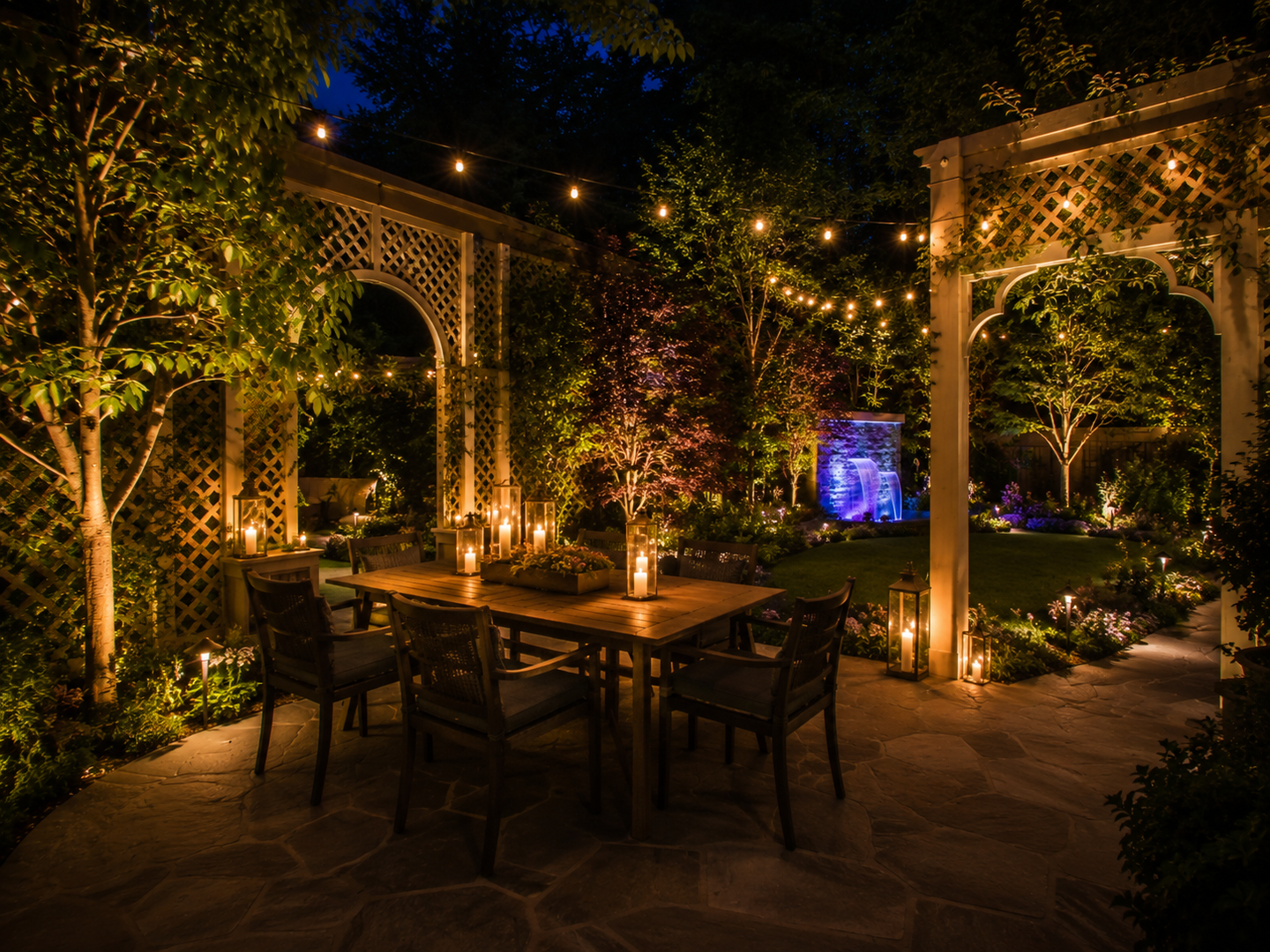
A private garden, patio, or backyard can have the right plants, furniture, and layout, but still feel unfinished at night. Lighting is what gives the space a second life after dark. It makes steps easier to see, turns pathways into invitations, gives seating areas a warmer mood, and helps architectural or landscape features stay visible without overpowering the yard.
The best outdoor lighting plans usually begin with a simple question: what should this area feel like when people are actually using it?
Where lighting earns its keep
Think in zones instead of fixtures.
A yard does not need to be lit evenly from fence to fence. Most spaces work better when lighting has a job.
Pathways
Low, controlled path lighting helps people move through the yard without turning the space into a runway.
Gathering areas
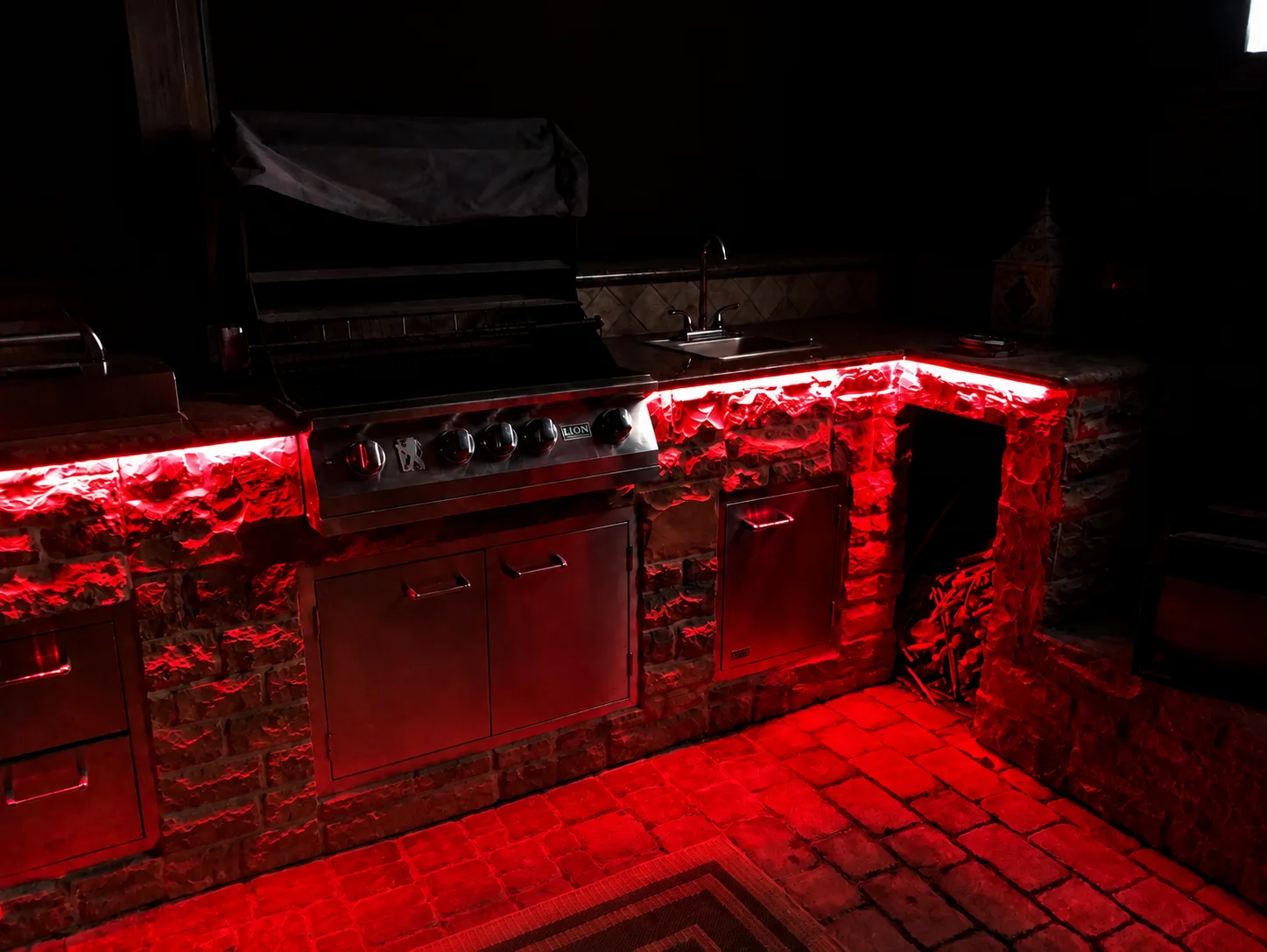
Seating areas usually need softer light, especially around patios, pergolas, outdoor kitchens, and fire features.
Plants and trees
Uplighting or grazing can add depth to trees, palms, garden beds, and textured walls without blasting light everywhere.
Entries and edges
Gates, steps, doorways, and transitions should be easy to read at night. This is where useful light matters most.
1. Use pathway lighting to guide, not glare
Path lights are often treated like little yard decorations, but their real job is way more practical. They help people move through the space without guessing where the walkway, step, or border is. The goal is controlled visibility, not a row of tiny airport beacons.
In many yards, fewer fixtures placed with intention can look better than a fixture every few feet. Spacing, height, beam spread, and fixture direction all matter.
2. Give seating areas softer layers
Patios and outdoor living areas usually feel best with layered light. That might include subtle overhead lighting, warm accent light near a wall or column, and task lighting near an outdoor kitchen or prep area.
The trick is avoiding one harsh source that does all the work. Nobody wants to relax under a spotlight that feels like a parking lot interrogation.
3. Highlight texture, not just objects
Landscape lighting gets interesting when it catches texture. Brick, stone, palms, tree canopies, fences, and planting beds can all create depth when the light is aimed carefully.
This is where fixture placement matters. A small change in angle can turn a flat wall into a warm backdrop or make a tree feel like the anchor of the yard.
4. Keep safety lighting separate from mood lighting
Safety lighting has a different job than atmosphere. Steps, gates, uneven transitions, equipment areas, and entries need enough light to be useful. Mood lighting can stay softer and more selective.
When everything is treated as mood lighting, practical areas can be too dim. When everything is treated as safety lighting, the whole yard can feel washed out. The better plan gives each zone the level of light it actually needs.
Before fixtures go in
Plan the wiring like the yard may change later.
Outdoor spaces evolve. A garden bed grows in, a pergola gets added, furniture moves, or a future outdoor kitchen becomes part of the plan. A better electrical layout thinks beyond the first fixture.
That may mean planning circuit locations, switching, controls, low-voltage transformer placement, conduit paths, and future expansion points before everything is covered by landscaping.
Ask HGE about outdoor lighting planningGood lighting avoids
Common backyard lighting mistakes
Too many visible fixtures
The light should usually be noticed before the fixture is.
Glare near seating areas
Bright light aimed at eye level can ruin an otherwise comfortable space.
No plan for controls
Switching, timers, smart controls, and zones should be considered early.
No room for future upgrades
A little planning can make later additions less disruptive.
Outdoor lighting FAQ
Questions homeowners often ask before starting
Should outdoor lighting be line voltage or low voltage?
It depends on the fixture type, layout, control needs, and where the lighting is being installed. Many landscape lighting systems use low voltage, while certain outdoor fixtures, outlets, and equipment areas may involve line voltage wiring.
Can outdoor lighting be added to an existing yard?
Yes, but the best route depends on access, existing circuits, landscape layout, and where fixtures or controls need to go. Planning matters so the finished work does not feel like an afterthought.
What should be planned before landscaping is finished?
Conduit paths, transformer locations, switching, fixture zones, outdoor outlets, and future expansion points are easier to think through before hardscaping or planting is complete.
Does Houston Gulf Electric handle lighting layout and installation?
Houston Gulf Electric can help with outdoor lighting planning, wiring, fixture placement considerations, controls, and installation for homes in League City and nearby Gulf Coast communities.
Ready to make the yard work after dark?
Let’s plan lighting that fits how the space is actually used.
Tell Houston Gulf Electric what you want the space to feel like, what areas need to be safer at night, and what features you want to highlight.