Electrical Troubleshooting
Electrical Troubleshooting for Problems That Need a Cause, Not a Guess
Electrical problems are not always obvious from the outside. A breaker trips, a light flickers, an outlet stops working, or one part of the home loses power, but the real cause may be somewhere else in the circuit.
Houston Gulf Electric provides licensed electrical troubleshooting for homes and businesses across League City and the Greater Houston area. We help track down the source of the issue, explain what we find, and recommend the right repair path before bigger decisions are made.
Free estimates. Emergency electrical service. Clear answers before the repair.
Serving League City, Clear Lake, Webster, Friendswood, Dickinson, Kemah, Seabrook, Pearland, Pasadena, and surrounding Greater Houston communities.
Start With the Symptom
You Do Not Have to Know the Exact Electrical Problem
Most people do not call an electrician with a perfect diagnosis. They call because something changed.
Maybe the lights started flickering. Maybe a breaker will not stay on. Maybe one outlet works and the one beside it does not. Maybe an inspector, remodeler, appliance installer, tenant, or property manager pointed out something that does not look right.
That is exactly what electrical troubleshooting is for.
Instead of forcing the problem into the wrong category, we start with what you are seeing, then work backward until the cause is clear.
Common Electrical Symptoms
What Is the Electrical Problem Doing?
Breakers Keep Tripping
A tripping breaker may point to an overloaded circuit, damaged wiring, a faulty device, moisture, equipment trouble, or a problem inside the panel. The breaker is the warning sign. Troubleshooting helps find what is causing it.
Lights Flicker, Dim, or Pulse
Flickering lights can come from a loose connection, fixture issue, switch problem, overloaded circuit, shared load, or panel-side concern. The pattern matters, especially when it happens in more than one room.
Outlets Suddenly Stopped Working
Dead outlets are often tied to GFCI protection, loose connections, damaged devices, failed wiring points, or a circuit issue upstream. We trace the path instead of replacing parts blindly.
Switches or Fixtures Act Strange
A switch that feels warm, a fixture that works sometimes, or a fan and light combination that behaves oddly can point to wiring, control, fixture, or load problems.
Buzzing, Burning Smells, or Warm Devices
Buzzing sounds, burning smells, discoloration, sparking, or warm outlets should be taken seriously. Stop using that device or circuit and call for emergency electrical service before the problem gets worse.
Power Is Out in One Area
When only part of the home or business loses power, the issue may be a tripped device, failed connection, damaged circuit, panel problem, or equipment tied into that area.
New Equipment Keeps Causing Problems
Appliances, HVAC equipment, lighting, tools, commercial equipment, or generator-related components can expose weak circuits, undersized wiring, labeling issues, or panel capacity problems.
Something Was Flagged During an Inspection
If an inspector, buyer, seller, remodeler, or another contractor pointed something out, we can help sort out what it means and what kind of repair or upgrade may actually be needed.
Diagnosis Before Decisions
Troubleshooting Is Not the Same as Guessing
Electrical work can get expensive fast when the wrong problem is chased.
That is why troubleshooting should not start with “you probably need a new panel” or “let’s just replace this part and see what happens.”
A licensed electrician should narrow the problem down first. We look at the symptom, the circuit, the devices, the panel, the recent history of the space, and how the problem behaves. From there, we explain what we found in plain language and walk through the repair path.
Sometimes the fix is small. Sometimes the issue points to a larger wiring or panel concern. Sometimes the problem is connected to lighting, equipment, remodeling work, or past electrical changes.
The goal is to know before moving forward.
Real Problems Leave Clues
The Symptom Is Usually Only the Beginning
A breaker trip, dead outlet, flickering light, or failed device is usually just the visible part of the problem. The important work is finding what caused it.
Loose terminations, worn receptacles, damaged insulation, arcing conductors, and messy panels can all create electrical issues that are easy to misread if the work is rushed.
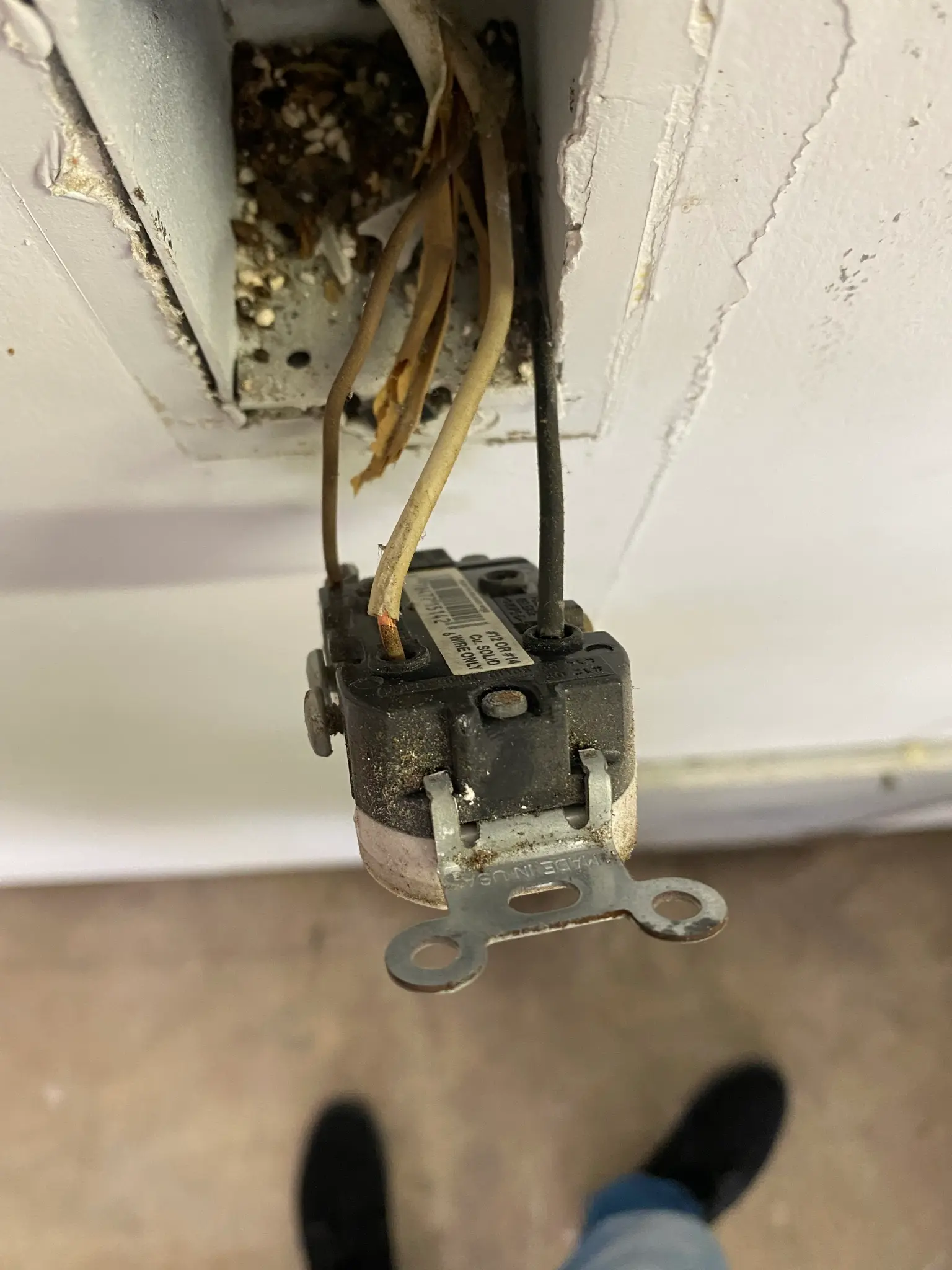
Found During Troubleshooting
Lost Neutral at a Backstabbed Receptacle
A receptacle had been backstabbed, and over time the spring connection wore out. The neutral was lost on the circuit, creating a problem that could not be solved by guessing at the breaker or replacing random parts.
The remedy was to replace the receptacle, terminate the conductors properly, and test the circuit for correct operation.
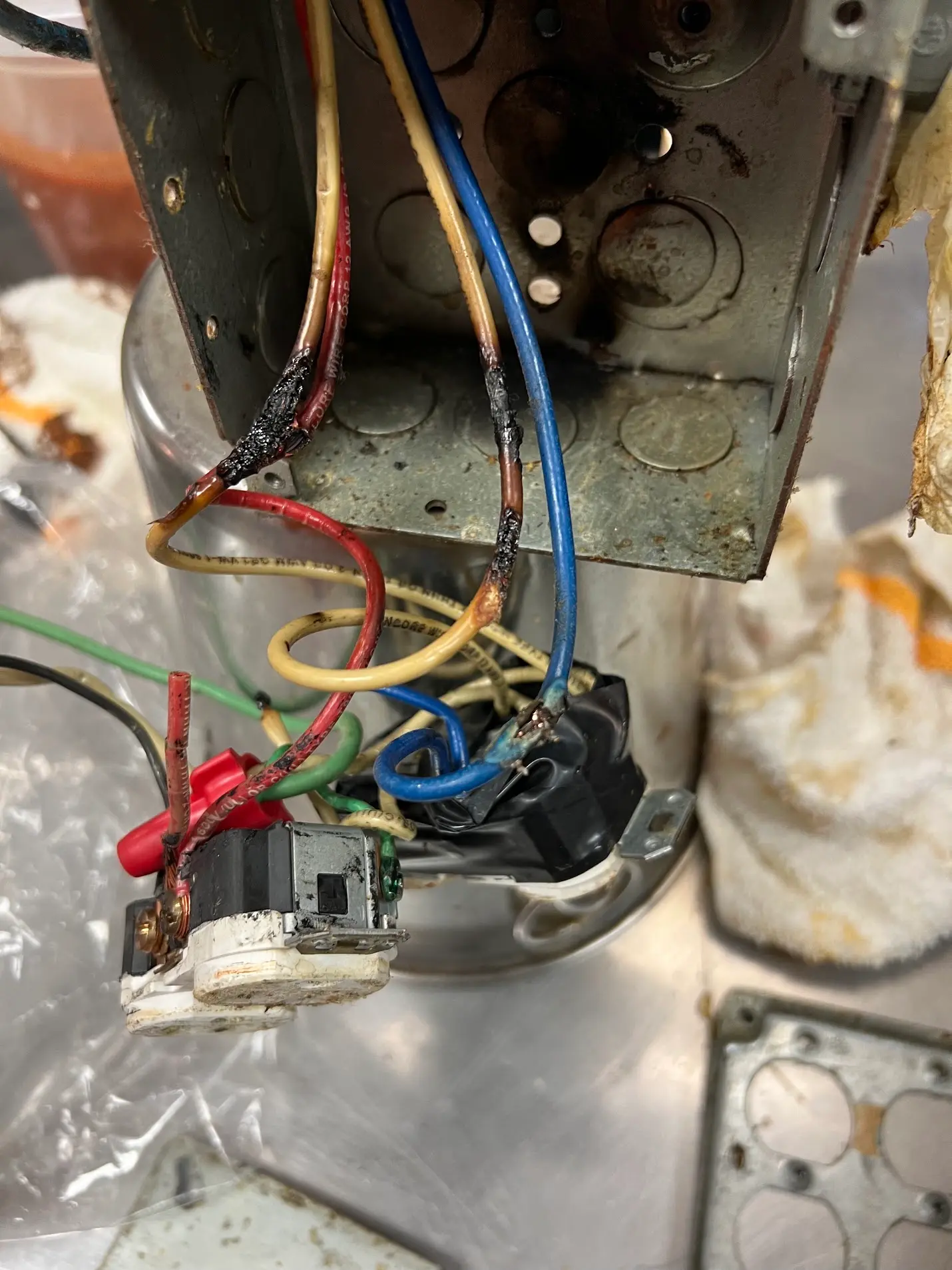
Burn Marks Tell a Story
Loose Line-Side Wire Causing Arcing
A loose line-side conductor was arcing because the connection was not secure. That kind of failure can create heat, damage nearby components, and turn a small termination issue into a much larger repair.
The remedy was to replace the faulty connector, redo the terminations, and test for proper voltage and function.
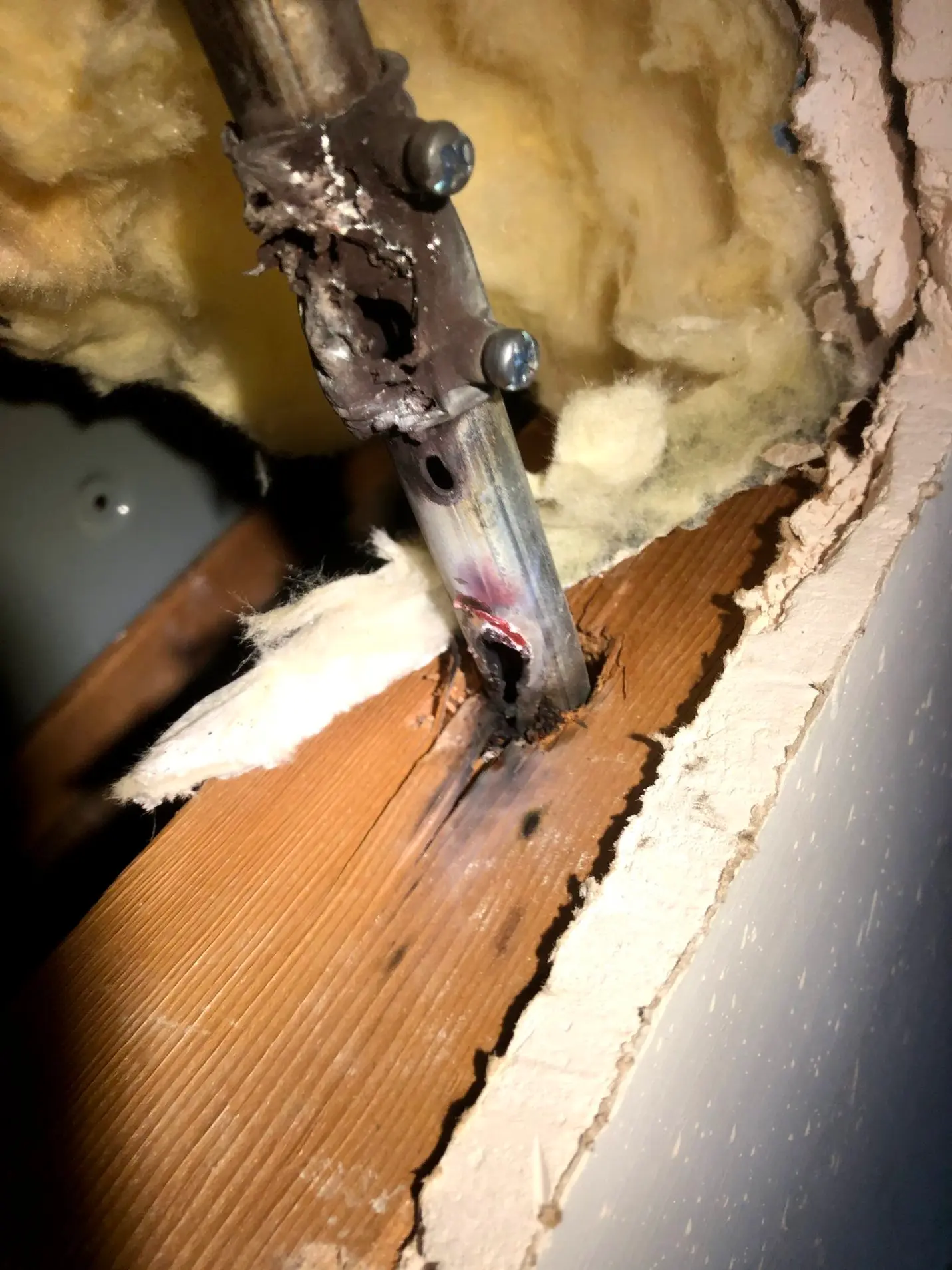
Workmanship Details Matter
Damaged Wire Inside Conduit
A conductor was nicked inside metal conduit because the conduit had not been properly reamed. Over time, the damaged insulation allowed the wire to contact the pipe and ground out.
Small workmanship details can become big troubleshooting problems later. Clean conduit prep, protected conductors, and careful installation matter long after the original job is finished.
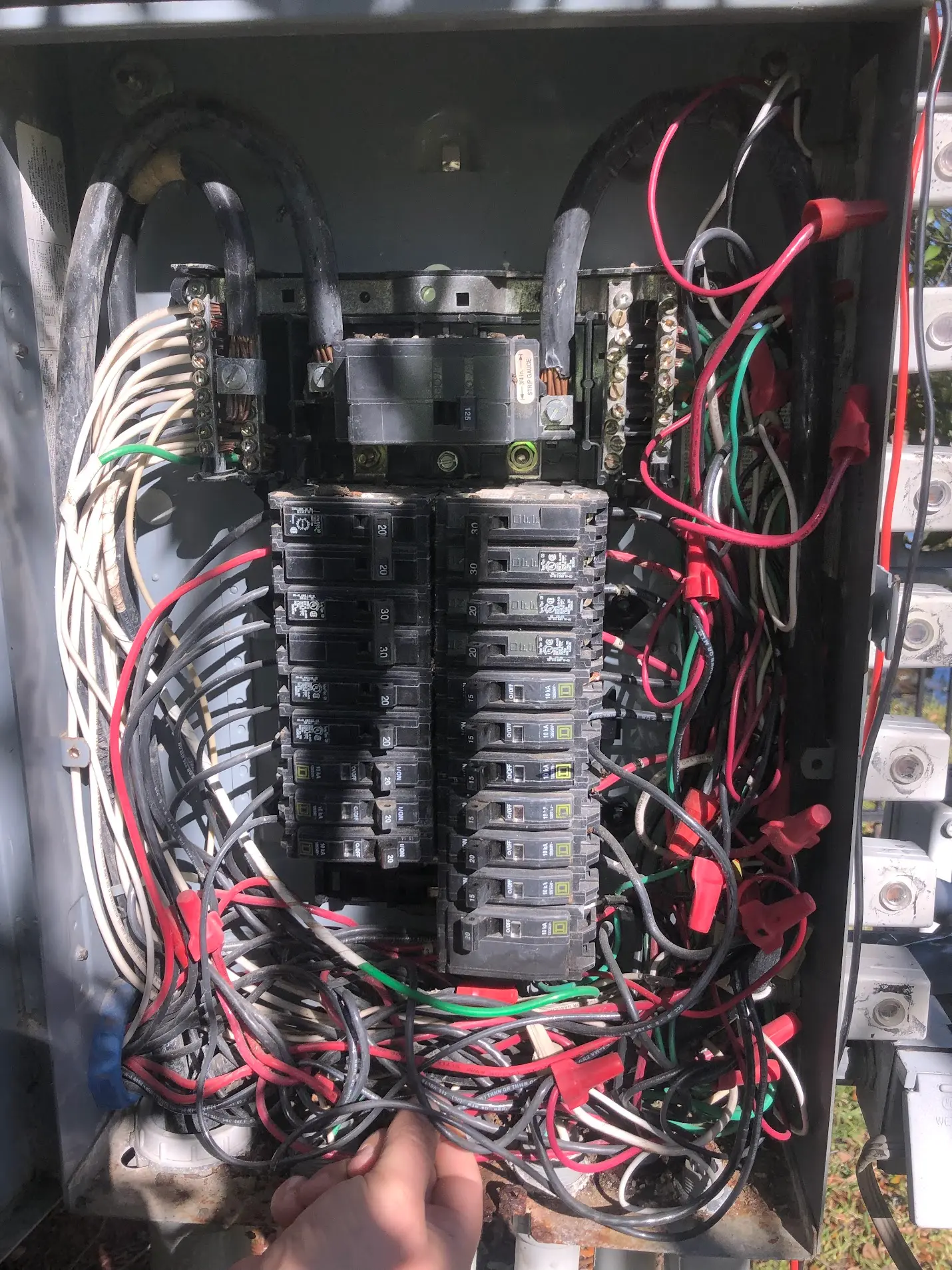
Why Clean Panel Work Matters
Messy Panel Wiring That Slows Everything Down
A disorganized panel can make even a simple repair harder to trace. When wires are crowded, labels are unclear, and circuits are difficult to follow, future troubleshooting takes longer and becomes more frustrating than it needs to be.
Clean panel work is not just about looks. It helps future repairs, labeling, inspections, and upgrades make sense.
How We Approach It
A Clear Process for Unclear Electrical Problems
We Listen to What Changed
When did it start? Does it happen all the time or only when certain equipment runs? Has there been recent storm activity, remodeling, new appliances, new lighting, or work done nearby? Those details matter.
We Narrow Down the Affected Area
We look at whether the issue is isolated to one device, one room, one circuit, one panel section, or a larger part of the electrical system.
We Check the Circuit Path
Depending on the symptom, this may include outlets, switches, fixtures, GFCI or AFCI protection, junction points, breaker behavior, labeling, load conditions, and panel-side connections.
We Explain What We Found
You should not have to decode electrician shorthand. We explain what appears to be happening, why it matters, and what the next move should be.
We Recommend the Right Repair Path
If the issue can be corrected directly, we explain the repair. If it points to a bigger need, such as panel work, lighting corrections, circuit changes, or equipment coordination, we route it clearly.
Not Every Problem Is the Same Kind of Problem
Troubleshooting Helps Route the Work Correctly
Residential Electrical
For homes, troubleshooting often starts with everyday frustration: outlets that stop working, flickering lights, bathroom or kitchen power issues, garage circuits, outdoor outlets, remodel wiring, or older electrical equipment that is no longer easy to understand.
Residential ElectricalCommercial Electrical
For commercial spaces, electrical problems can interrupt work areas, equipment, lighting, tenant improvements, signage, panels, or circuits people depend on throughout the day. The repair path needs to consider how the space is used.
Commercial ElectricalPanel Upgrades
A panel does not need to be blamed for every problem, but it should not be ignored either. Breaker behavior, labeling, load demand, older equipment, messy wiring, and future circuit needs can all point back to the panel.
Panel UpgradesLighting
Flickering, dimming, failed fixtures, outdoor lighting problems, under-cabinet lighting issues, or poorly performing work-area lighting may need a lighting-specific correction instead of a general repair.
LightingGenerator Installation
Generator, transfer switch, standby power, and storm-readiness issues need careful coordination with the panel and the circuits being supported. Troubleshooting helps separate equipment behavior from wiring or load concerns.
Generator InstallationFor Homeowners
Electrical Problems at Home Should Feel Explainable
A home electrical problem can be frustrating because it interrupts normal routines and rarely gives a clear answer on its own.
- One room loses power.
- A bathroom outlet will not reset.
- The kitchen lights flicker when equipment turns on.
- A garage outlet works one day and not the next.
- A breaker trips, but the label does not tell you much.
We help sort out what is happening so you are not left guessing whether the problem is the outlet, the breaker, the wiring, the fixture, the panel, or something connected to the circuit.
For Businesses
Electrical Issues Can Disrupt the Way a Space Works
Commercial electrical problems are not just inconvenient. They can affect work areas, equipment, lighting, customer spaces, storage areas, exterior lighting, tenant improvements, and daily operations.
Houston Gulf Electric helps identify the cause, explain the practical impact, and recommend a repair path that makes sense for the space.
Whether the issue is isolated or part of a larger electrical concern, the goal is to restore confidence in how the system is working.
What We May Check
The Details Depend on the Symptom
Every troubleshooting call is different, but common areas we may inspect include:
- Breaker behavior
- Panel labeling
- GFCI and AFCI protection
- Outlet and switch wiring
- Light fixtures and controls
- Circuit load and equipment demand
- Loose or damaged connections
- Backstabbed receptacles
- Lost neutrals
- Arcing conductors
- Outdoor or moisture-exposed devices
- Recent remodel or installation work
- Storm, surge, or equipment-related damage
- Generator and transfer switch coordination
- Older wiring or unclear circuit paths
- Messy panel conditions that make tracing harder
Before You Call
Helpful Details to Share
You do not need to know the cause. Just tell us what the problem is doing.
- What stopped working
- When the issue started
- Whether it happens constantly or only sometimes
- Whether a breaker trips
- Whether any outlet, switch, or fixture feels warm
- Whether you smell burning or hear buzzing
- Whether the problem started after a storm
- Whether new equipment, appliances, lighting, or remodeling work was recently added
- Which rooms, circuits, or areas are affected
- Whether another contractor or inspector flagged the issue
Photos are helpful when there is visible damage, panel labeling, outdoor equipment, fixtures, or an inspection note you want us to understand.
Local Coverage
Electrical Troubleshooting Across the League City and Clear Lake Area
Houston Gulf Electric helps with electrical troubleshooting in League City, Clear Lake, Webster, Friendswood, Dickinson, Kemah, Seabrook, Pearland, Pasadena, and surrounding Greater Houston communities.
We work with homeowners, commercial spaces, remodel situations, equipment issues, lighting problems, panels, circuits, and unclear electrical symptoms that need a closer look.
Local Trust
See What Your Neighbors Are Saying
Electrical troubleshooting is about trust. You are inviting someone into a problem you may not fully understand yet, and you should feel comfortable with how the work is explained.
Questions Before You Call
Electrical Troubleshooting FAQs
When should I call for electrical troubleshooting?
Call when something changes and you cannot clearly explain why. Flickering lights, tripping breakers, dead outlets, buzzing sounds, warm devices, burning smells, partial power loss, or repeated electrical issues are all good reasons to have the problem checked.
Do you offer free estimates for electrical troubleshooting?
Yes. Houston Gulf Electric offers free estimates. If you are dealing with flickering lights, tripping breakers, dead outlets, panel concerns, or another unclear electrical problem, you can describe what is happening and we will help determine the next step.
Do you offer emergency electrical service?
Yes. Houston Gulf Electric offers emergency electrical service for problems that need urgent attention, including burning smells, sparking, repeated breaker trips, partial power loss, unsafe outlets, or electrical issues that may affect safety or daily operations.
Are you licensed?
Yes. Houston Gulf Electric is a licensed electrical contractor serving League City, Clear Lake, Webster, Friendswood, Dickinson, Kemah, Seabrook, Pearland, Pasadena, and the Greater Houston area.
Is a tripping breaker always a panel problem?
No. A tripping breaker can be caused by the panel, but it can also come from an overloaded circuit, damaged wiring, moisture, a faulty device, equipment demand, or something connected to that circuit. Troubleshooting helps separate the warning sign from the cause.
Why do my lights flicker?
Flickering lights can happen for several reasons, including fixture problems, switch issues, loose connections, shared loads, overloaded circuits, or panel-side concerns. The pattern matters. One flickering fixture is different from multiple rooms dimming at the same time.
Should I keep resetting a breaker that trips?
No. If a breaker trips once, it may be a temporary overload. If it keeps tripping or trips immediately after being reset, stop resetting it and have the issue checked. The breaker may be preventing a more serious problem from continuing.
Can you troubleshoot outlets that stopped working?
Yes. Dead outlets may be connected to GFCI protection, failed devices, loose wiring, damaged connections, breaker issues, or problems elsewhere on the same circuit. We trace the circuit instead of assuming the outlet itself is the only issue.
Can troubleshooting lead to a panel upgrade recommendation?
Sometimes, but not always. Troubleshooting may show that the issue is limited to a device, fixture, circuit, or connection. In other cases, the panel may be part of the problem, especially with older equipment, poor labeling, repeated breaker issues, messy wiring, or added electrical demand.
What should I do if I smell burning or see sparks?
Stop using the affected outlet, switch, fixture, or circuit. If there is active smoke, fire, or immediate danger, call emergency services first. For burning smells, sparking, heat marks, buzzing electrical devices, or breakers that keep tripping, contact a licensed electrician for emergency electrical service.
Know What It Is Doing?
Tell Us the Symptom. We’ll Help Track Down the Cause.
You do not have to diagnose the issue before reaching out. Tell Houston Gulf Electric what changed, where it is happening, and what you have noticed. We provide free estimates, licensed electrical troubleshooting, and emergency electrical service when the problem needs attention quickly.
Serving League City, Clear Lake, Webster, Friendswood, Dickinson, Kemah, Seabrook, Pearland, Pasadena, and the Greater Houston area.