Part of House Lost Power? 5 Safe Troubleshooting Steps Before You Call an Electrician
Part of house lost power? Are you sitting in a dark room anxiously scrolling forums or searching “power out in part of house breaker not tripped reddit”? Start here. These are the safe checks homeowners can make before calling an electrician.
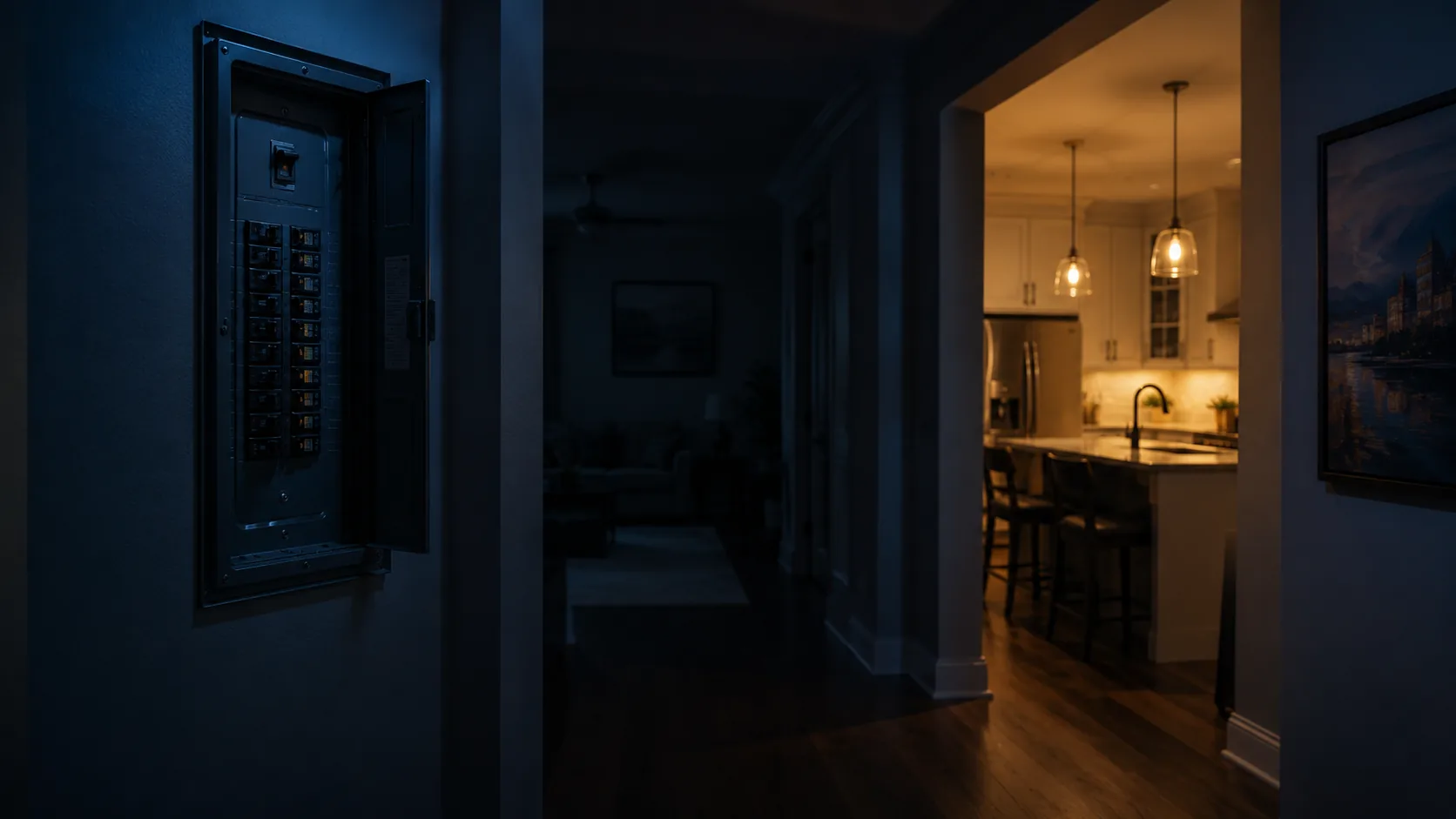
Part of house lost power? That can be frustrating, especially when the rest of the home still seems fine. One room goes dark. A bathroom outlet stops working. The garage has no power. Half the kitchen shuts off while everything else keeps running, because apparently homes enjoy adding mystery to basic survival tasks.
Before you panic, there are a few simple things you can check safely. Sometimes the issue is a tripped breaker, a GFCI outlet, or an overloaded circuit. Other times, the problem is deeper in the wiring, panel, or connection points and needs a licensed electrician.
The key is knowing where safe homeowner checks stop and electrical work begins.
When part of house lost power issues show up, the safest first step is to narrow down whether the problem is tied to a breaker, GFCI outlet, overloaded circuit, or something deeper in the wiring.
Start Here
First, Figure Out What Kind of Power Loss You Have
Not every power loss points to the same problem. Start by narrowing down what is actually out before flipping breakers like you are launching a questionable backyard rocket.
Whole House Outage
If the entire home has no power, the issue may be related to the utility, storm damage, the meter, the main disconnect, or a generator and transfer switch setup.
One Room or Area Out
If only one room or section lost power, the issue may involve a breaker, GFCI outlet, overloaded circuit, loose connection, damaged outlet, or wiring problem.
One Dead Outlet
If only one outlet is dead, it may still be protected by a GFCI somewhere else. The outlet that lost power is not always the outlet with the reset button.
Flickering or Dimming Lights
Flickering, dimming, buzzing, or lights changing when appliances start can point to an overloaded circuit, loose connection, panel issue, or another concern.
Safe Check #1
Check the Breaker Panel Safely
If part of the home lost power, the breaker panel is usually the first place to check.
Look for a breaker that is not fully in the ON position. Some tripped breakers move clearly to OFF, but others sit in the middle. If you find one, turn it fully OFF first, then back ON.
Do not keep resetting the same breaker over and over. A breaker that trips again is doing its job. It is warning you that something on that circuit may be overloaded, damaged, or unsafe.
Safe Check #2
Look for a Tripped GFCI Outlet
GFCI outlets are common in areas where water may be nearby. According to the Electrical Safety Foundation International , GFCIs help shut off power when they detect ground faults or leakage currents, which is why they are commonly used in kitchens, bathrooms, garages, outdoor areas, laundry rooms, patios, and near sinks.
A GFCI outlet usually has TEST and RESET buttons. When it trips, it can shut off power to other outlets connected downstream. That means the dead outlet may not have the reset button on it, because apparently electrical systems were designed as scavenger hunts with consequences.
Check these areas:
- Bathrooms
- Kitchen counters
- Garage outlets
- Exterior outlets
- Laundry areas
- Patio or porch outlets
- Pool equipment areas
- Utility rooms
Safe Check #3
Unplug High-Demand Devices and Reduce the Load
Sometimes power loss happens because too much is being pulled from one circuit. Modern homes are full of devices that ask old wiring to do Olympic-level lifting. Humanity, naturally, has responded by buying larger air fryers.
If the power went out while one of these was running, unplug it before resetting the breaker.
This does not always mean something is broken. It may mean the circuit is overloaded or the layout of the home does not match the way the space is being used today.
The safe fix may be as simple as moving devices to another circuit. In other cases, the area may need a dedicated circuit installed.
Safe Check #4
What If the Breaker Is On but There Is Still No Power?
This is where homeowners usually get stuck.
If the breaker is on and part of the house still has no power, the issue may be a tripped GFCI somewhere else, a failed outlet, a bad switch, a loose connection, damaged wiring, a bad breaker, moisture in an outdoor box, storm damage, or a problem inside the electrical panel.
This is also where troubleshooting should stop being a homeowner task.
Safe Check #5
Watch for Warning Signs That Mean Stop Immediately
Some electrical symptoms should not be ignored. A breaker trip by itself may be simple. A breaker trip with heat, smell, buzzing, or repeated failure is a warning.
Gulf Coast Homes
Be Extra Careful After Storms
In the Gulf Coast area, storms can create electrical problems that are not always obvious right away.
Heavy rain, wind, lightning, surge events, and moisture intrusion can affect outdoor outlets, garage circuits, panels, lighting, and generator-related equipment.
If power loss started after a storm, do not reset breakers repeatedly or use outlets that may have been exposed to water. Outdoor electrical boxes, exterior lighting, pool equipment, and garage outlets should be checked carefully.
FAQ
Partial Power Loss Questions
Why did part of house lost power issues happen in only one room?
A single room may lose power because of a tripped breaker, tripped GFCI outlet, overloaded circuit, failed outlet, bad switch, loose connection, or wiring issue.
Can a GFCI outlet shut off power to another room?
Yes. A GFCI outlet can protect other outlets downstream. That means a dead outlet may be controlled by a GFCI in a bathroom, garage, kitchen, laundry room, exterior area, or another nearby location.
What should I do if the breaker keeps tripping?
Stop resetting it repeatedly. Unplug devices from that circuit and try once. If it trips again, call an electrician. Repeated tripping usually means the breaker is responding to an overload, fault, damaged device, or wiring problem.
Is it safe to open an outlet if the power is out?
No. A circuit can still be dangerous even when part of it appears dead. Homeowner troubleshooting should stop at checking breakers, resetting GFCI outlets, and unplugging devices.
When should I call Houston Gulf Electric?
Call if the simple checks do not solve the issue, if the breaker keeps tripping, or if you notice heat, burning smells, buzzing, sparks, discoloration, moisture, or power loss after a storm.
Houston Gulf Electric
Still Missing Power in Part of Your Home?
Houston Gulf Electric troubleshoots power loss, dead outlets, tripped breakers, GFCI issues, lighting problems, panel concerns, storm-related electrical issues, and circuit problems for homeowners across League City, Clear Lake, Webster, Friendswood, Dickinson, Kemah, Seabrook, Pearland, Pasadena, and the Greater Houston area.
The goal is not just to get the power back on. It is to find out why it went out, make the repair safely, and leave the work clean, organized, and done right.