Houston Power Infrastructure
After the Storm: How Houston Power Restoration Works and When Your Property Needs Electrical Repair
When a hurricane knocks out electricity across Greater Houston, the utility outage may be only part of the problem. Storm damage can also affect the electrical equipment serving an individual home or business.
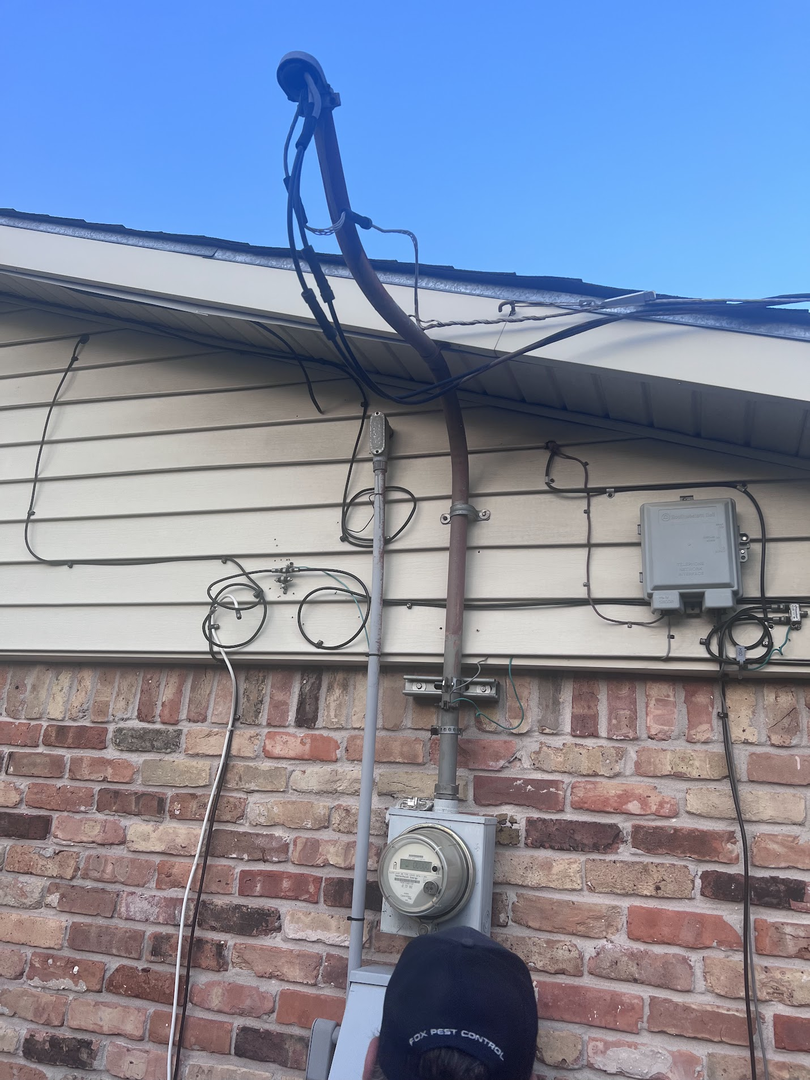
A neighborhood outage and damage to a property’s electrical service are separate problems. Restoring one does not automatically repair the other.
One outage, two systems
The utility grid and the building’s electrical system do different jobs.
At the property level, hurricane damage may involve the regional utility system, equipment attached to the building, or both. Knowing the difference helps determine who needs to respond.
Utility-owned infrastructure
The utility maintains the transmission and distribution equipment that carries electricity across the region and through neighborhoods.
- Transmission lines
- Substations
- Distribution feeders
- Utility poles and transformers
- Neighborhood service lines
Customer-owned electrical equipment
The property owner is generally responsible for electrical service equipment attached to the home or building and the system beyond it.
- Weatherheads and service masts
- Customer-owned risers
- Meter enclosures in applicable situations
- Disconnects and electrical panels
- Circuits, outlets, switches and wiring
How electricity reaches the property
Houston’s electrical system is a chain, not one enormous switch.
Damage at different points affects different numbers of customers. A transmission problem can affect a large region. A damaged weatherhead may leave only one property without power.
Transmission
High-voltage lines move electricity across the region.
Substations
Substations reduce voltage and route power into local distribution systems.
Feeders
Distribution feeders carry electricity across larger neighborhood areas.
Laterals and transformers
Smaller lines and transformers bring electricity closer to individual properties.
Building service
Service equipment carries electricity into the panel and through the property’s circuits.
A modern Houston case study
Hurricane Beryl showed how widespread distribution damage can become.
Hurricane Beryl made its final landfall near Matagorda during the early morning of July 8, 2024, before moving through Southeast Texas as a Category 1 hurricane. [1]
The storm crossed approximately 80% of CenterPoint Energy’s Houston service territory. Although the transmission system generally remained resilient, thousands of uprooted trees and falling limbs caused widespread damage to overhead distribution lines. [2]
A storm does not need to destroy the regional transmission system to create prolonged outages. Thousands of smaller failures across feeders, laterals, transformers and service equipment can take considerable time to identify and repair.
How restoration works
Restoring power is a sequence of inspections, isolation and repairs.
Crews must determine what is damaged, what remains energized, where hazards exist and which equipment can safely return to service. It is not simply a matter of flipping the neighborhood back on.
Hazards and major damage are assessed.
Crews identify downed lines, blocked access, damaged poles, vegetation interference, substation problems and conditions that may endanger the public or utility workers.
Transmission lines and substations are stabilized.
These systems affect large areas and must be operating before downstream distribution equipment can reliably carry power.
Major distribution feeders are repaired.
Restoring one feeder can return electricity to hundreds or thousands of customers at once, so these larger circuits are a major part of the early restoration effort.
Laterals, transformers and localized outages are addressed.
Once major circuits are energized, crews can work deeper into neighborhoods and resolve outages affecting smaller groups of customers.
Individual property problems remain.
A home or business may still be without power because its service equipment, panel, wiring or another localized part of the electrical system was damaged.
Where utility responsibility ends
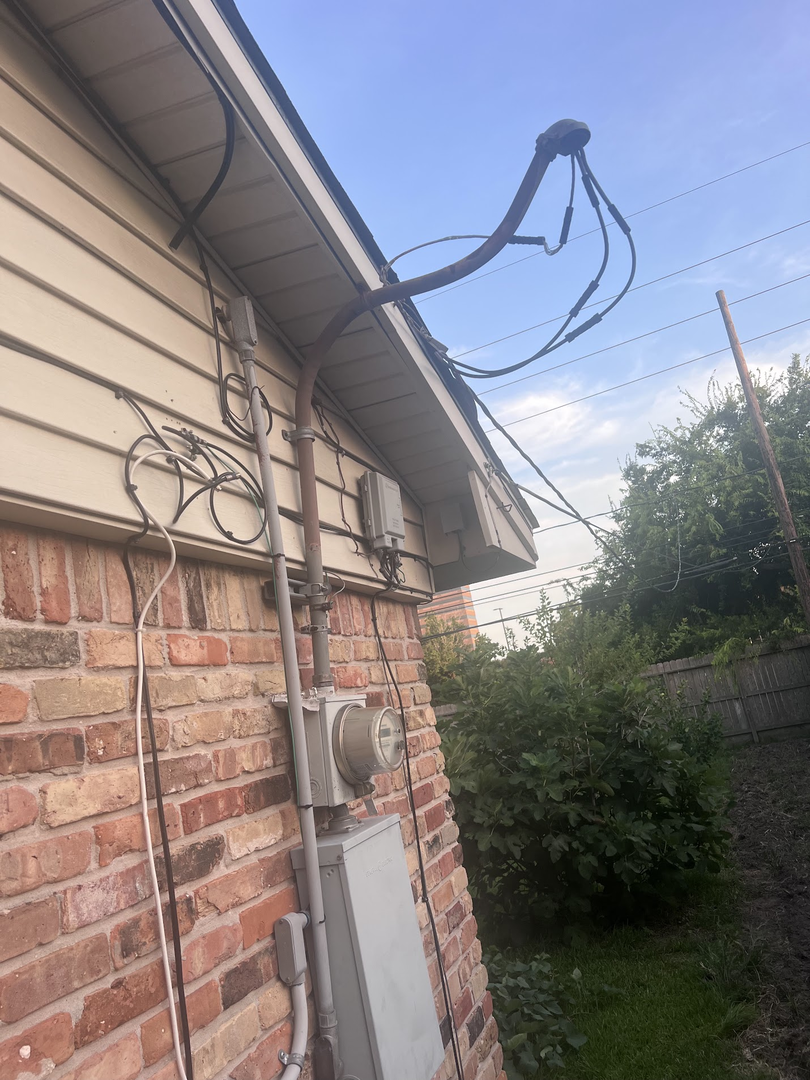
Utility restoration does not automatically repair building-mounted equipment.
CenterPoint explains that the weatherhead, where an overhead service connects to a home or building, is customer-owned equipment. A damaged weatherhead must be repaired by an electrician before the utility can reconnect service. [3]
For an underground service, the customer-owned portion may include the riser below the meter. The exact division of responsibility depends on the service configuration, so report the outage first and confirm what equipment requires repair.
- Report downed lines and neighborhood outages to the utility.
- Do not approach damaged service conductors or meter equipment.
- Have damaged customer-owned equipment evaluated by an electrician.
- Complete required repairs before requesting utility reconnection.
After power returns
The lights coming back on does not prove that every circuit is safe.
Storm damage may appear only after the utility restores service. Stop using the affected area when power is unstable or electrical equipment shows signs of damage.
Partial power
Only part of the home or business regains power, or some rooms remain completely dead.
Unstable lighting
Lights flicker, pulse, become unusually bright or dim, or change when equipment starts.
Repeated breaker trips
A breaker trips immediately, will not remain reset or repeatedly shuts the same circuit off.
Heat or odor
Outlets, switches or panels feel warm, appear discolored or produce an overheated smell.
Noise or arcing
Buzzing, crackling, popping, sparking or visible arcing occurs near electrical equipment.
Visible service damage
The weatherhead, service mast, meter area, panel, exterior wiring or connected structure appears damaged.
Water intrusion
Electrical equipment needs more than time to dry.
Floodwater, roof damage and wind-driven rain can reach panels, outlets, switches, fixtures, appliances, wiring and equipment hidden inside walls.
Equipment that appears dry may still contain corrosion, contamination or internal damage. The Texas Department of Insurance advises having water-damaged electrical equipment evaluated by a qualified electrician. [4]
The repair path should follow where the water traveled, not only where the first visible damage appeared.
Backup power
Generator safety is part of hurricane electrical safety.
Portable generators create carbon-monoxide and electrical backfeeding risks when they are placed or connected incorrectly.
The CDC advises operating portable fuel-burning equipment outdoors and at least 20 feet from windows, doors and vents. A battery-operated or battery-backup carbon-monoxide detector should be used while a generator is operating. [5]
Never connect a portable generator directly to building wiring without approved transfer or interlock equipment that prevents electricity from feeding back toward utility lines.
Finding the real repair path
The goal is to identify where the electrical problem begins.
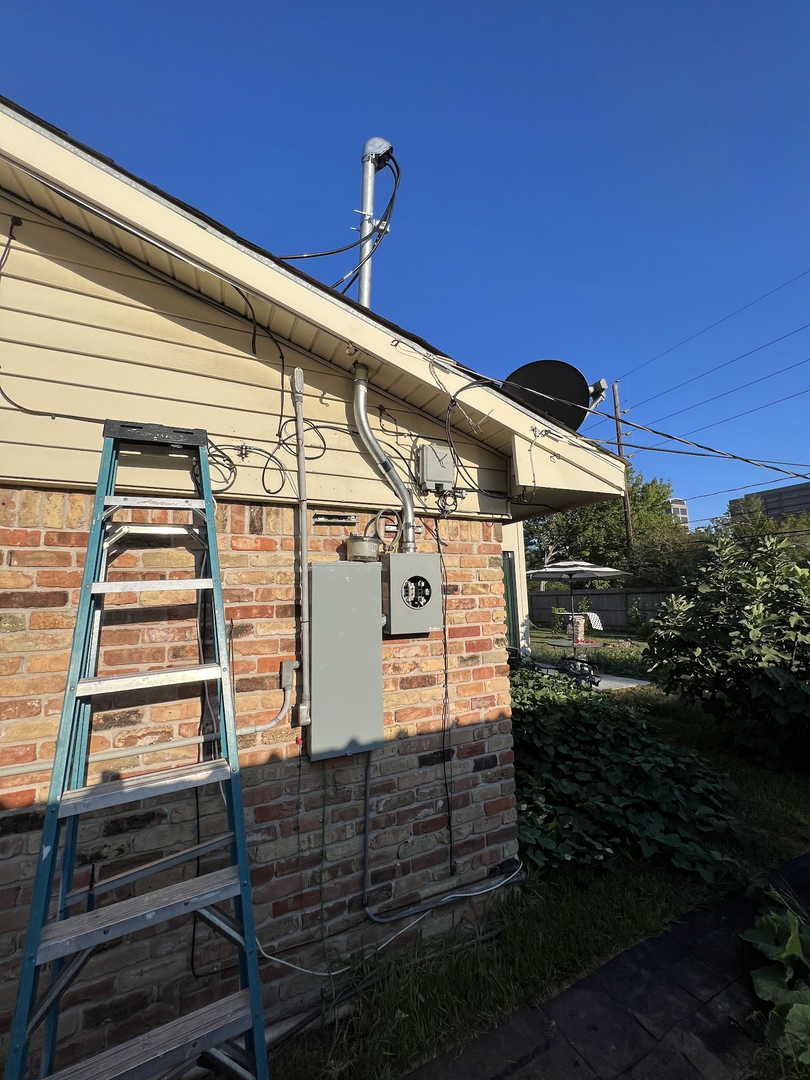
A property remaining without power does not automatically mean the utility has overlooked it. The problem may involve a damaged service mast, weatherhead, customer-owned riser, panel, breaker, connection or internal circuit.
The same symptoms can also have different causes. Partial power may come from utility-side equipment, customer-owned service equipment, a failed connection or a problem inside the electrical panel.
Electrical troubleshooting should narrow down the source before parts are replaced. That keeps the repair focused on what actually failed.
After the hurricane
A practical post-storm electrical checklist
Start with public hazards, then utility reporting, then the building’s electrical condition. Do not turn storm cleanup into an improvised electrical inspection.
- Stay away from downed or low-hanging power lines and anything touching them.
- Report the outage and visible utility-equipment damage to the electric utility.
- Do not approach a damaged service drop, transformer, meter area or flooded electrical space.
- Inspect the property only from a safe distance for visible service or structural damage.
- Do not use wet outlets, panels, switches, extension cords or appliances.
- Do not repeatedly reset a breaker that trips again.
- Watch for partial power, flickering, heat, unusual smells, noise or visible damage when power returns.
- Operate portable generators outdoors and away from doors, windows and vents.
- Never improvise a generator connection into the building’s electrical wiring.
- Contact an electrician when customer-owned equipment is damaged or problems remain after utility restoration.
Storm electrical FAQ
Questions Houston-area property owners ask after power outages
The utility and an electrician may both be involved, but they are responsible for different parts of the restoration and repair process.
Why do my neighbors have power when my property does not?
You may be on a different lateral or transformer, or your property may have a damaged service line, weatherhead, riser, meter enclosure, panel, breaker or internal electrical problem. Report the outage even when surrounding properties have power.
Who repairs a damaged weatherhead after a hurricane?
CenterPoint identifies the weatherhead as customer-owned equipment. A qualified electrician must repair it before the utility can restore service to the property.
Can I turn the main breaker back on after flooding?
Do not energize the system when water reached outlets, wiring, electrical panels or other equipment. Have the affected system evaluated before power is restored.
Why is only part of my property receiving power?
Partial power can result from a utility-side service problem, damaged customer-owned equipment, a failed connection, a panel issue or an internal circuit problem. Avoid using unstable circuits until the cause is identified.
Can an electrician restore a neighborhood utility outage?
No. Utility crews must repair and energize utility-owned transmission and distribution equipment. An electrician repairs customer-owned service equipment and the electrical system inside the property.
Should I call the utility or an electrician first?
Report the outage, downed lines and damaged utility equipment first. Contact an electrician when building-mounted equipment appears damaged, the utility says repairs are required, or electrical problems remain after surrounding service has returned.
Is it safe to keep resetting a breaker after a storm?
No. If a breaker trips again after one reset, leave it off. Repeated tripping can indicate damaged wiring, wet equipment, an overload, a fault or another problem that needs to be located.
Sources and further reading
- National Weather Service Houston/Galveston, Hurricane Beryl 2024.
- PA Consulting and CenterPoint Energy, Hurricane Beryl After-Action Final Report.
- CenterPoint Energy, Downed Power Lines and Customer-Owned Electrical Equipment.
- Texas Department of Insurance, Water-Damaged Electrical Equipment and Disaster Recovery.
- Centers for Disease Control and Prevention, Safety Guidelines After a Hurricane or Tropical Storm.
Houston Gulf Electric
Still having electrical problems after utility power returns?
Houston Gulf Electric helps homeowners and businesses understand storm-related electrical problems involving service equipment, partial power, panels, breakers, wet electrical areas, generator connections and damaged circuits across League City and the Greater Houston area.